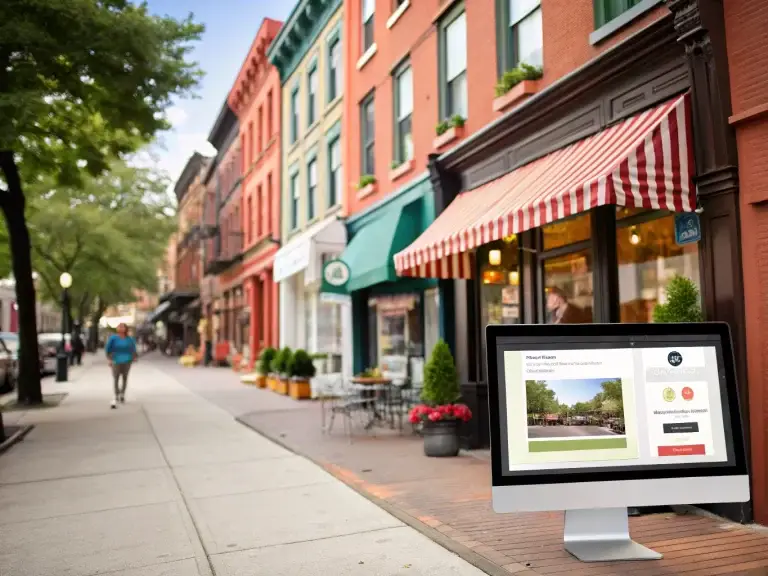
Web Design for New Jersey Small Business: What to Look For in 2026
Web Design for New Jersey Small Business: What to Look For in 2026
If you’re a small business owner in New Jersey shopping for a web designer, the choice in front of you matters more than most people realize. Your website isn’t just a branding piece — it’s often the first place a potential customer decides whether to call you or click away to a competitor. In a dense, competitive market like New Jersey, where customers in Newark, Jersey City, Hoboken, and the suburbs have plenty of options, a slow or generic website quietly bleeds leads every day. This guide cuts through the noise: here’s what to actually look for in web design for New Jersey small business owners, and how to make a decision you won’t regret.
Your Website Is Your Hardest-Working Salesperson
Most NJ small business owners think of their website as a digital business card. In reality, a well-built site works around the clock — answering customer questions, showing up in local search results, and moving visitors toward calling you or filling out a form. A weak site doesn’t just fail to help; it can actively cost you business when competitors with better-designed sites appear above you on Google.
The good news: a thoughtfully designed website can level the playing field with larger competitors, especially when it’s built with local search in mind from day one. You don’t need a massive budget or a Fortune 500 agency — you need a partner who understands your market and builds for results.
What Makes the NJ Market Different
New Jersey isn’t a monolith. The web design needs of a Hoboken boutique differ from those of an Edison HVAC company or a Newark law firm. A few characteristics shape what NJ small businesses need from a website:
You’re competing locally — and sometimes against NYC
Many New Jersey small businesses draw customers from both sides of the Hudson or compete against Manhattan-based providers for the same searches. That means your site needs to clearly signal where you serve, who you serve, and why a local customer should choose you over a big-city alternative.
Local buyers research before they act
BrightLocal’s Local Consumer Review Survey consistently finds that the vast majority of consumers check a business’s website before making contact — even when a friend referred them. If your site looks dated or loads slowly on a phone, you’ve already lost a portion of those visitors before they’ve seen what you offer.
Local SEO Has to Be Built Into the Design — Not Bolted On Later
This is the single biggest differentiator between a site that generates leads and one that doesn’t. Too many web designers deliver a beautiful site with no thought given to how it will rank in local search. By the time you notice the problem, reworking it is expensive and disruptive.
Good web design for New Jersey small businesses includes:
- Properly written title tags and meta descriptions for every page, targeting the searches your customers actually use
- A Google Business Profile-aligned homepage with consistent name, address, and phone number (NAP)
- Location-specific service pages if you serve multiple NJ towns or counties
- Schema markup (structured data) that helps Google understand your business type, location, and services
- Fast page load speed, which is both a Google ranking signal and a direct driver of how many visitors stay on your site
If you’re working on improving your local rankings alongside a new site, our guide to local SEO for small business in New Jersey covers the full strategy in depth.
Mobile-First Design Isn’t a Buzzword — It’s a Requirement
Over 60% of web traffic now comes from mobile devices, and for local searches — “plumber near me,” “NJ salon,” “web designer Hoboken” — the share is even higher. Google also uses the mobile version of your site for indexing and ranking, so a desktop-only focus is a silent SEO handicap.
What this means practically: your designer should be building your site for small screens first, testing it on real devices, and ensuring buttons are tappable, text is readable without pinching, and contact forms work cleanly on a phone. A site that looks polished on a desktop but breaks on a Samsung Galaxy isn’t ready for the New Jersey market, where most customers will find you on their phone while commuting or waiting in line.
Essential Pages for NJ Small Business Websites
You don’t need fifty pages to compete effectively. Most New Jersey small businesses are well-served by a focused site with these core pages done well:
- Home — a clear headline stating who you help, where you serve, and what to do next
- Services — ideally one page per core service, with language that mirrors how customers search
- About — the human story behind your business; local buyers care about this more than you might expect
- Contact — an easy-to-find phone number, your address, a simple form, and an embedded Google Map
- Testimonials or Reviews — social proof is especially persuasive in tight-knit NJ communities
For more on what structure and content actually converts visitors into customers, see our guide to small business website design fundamentals.
Questions to Ask Before Hiring a Web Designer in New Jersey
The market is crowded, and not every agency or freelancer claiming NJ web design experience is the right fit. These are the questions worth asking before you sign anything:
- Can you show me examples of sites you’ve built for NJ-based businesses? Local portfolio experience matters and is easy to verify.
- What CMS will my site run on, and can I update it myself? WordPress is the most flexible and widely supported option for most small businesses.
- Is SEO included in the build, or is that a separate engagement? If separate, ask exactly what technical SEO is covered in the design scope.
- What happens after launch? Who handles updates, security patches, and technical issues? Vague answers here are a red flag.
- Do you provide an itemized proposal? Transparent pricing — listing what’s included and what costs extra — is the mark of a trustworthy partner.
- Will the site meet ADA accessibility standards? New Jersey businesses are subject to accessibility requirements, and a competent designer builds this in from the start rather than treating it as optional.
What to Expect to Pay
Pricing for professional web design in NJ varies based on scope. A clean, conversion-focused WordPress site for a small business typically starts in the low-to-mid thousands for a 5–8 page build. More complex projects — e-commerce, custom integrations, or multilingual content — run higher. Be skeptical of extremely low quotes; a site that costs next to nothing often costs far more to fix later when it fails to rank or convert visitors. Focus on value, communication quality, and clear deliverables over the lowest price point.
The Bottom Line
The best web design investment a New Jersey small business can make is one that treats the site as a marketing asset from the first conversation — built on a solid technical foundation, optimized for local search, fast on mobile, and structured to convert visitors into real customers. The designer who asks the right questions about your business before opening a template is the one worth hiring.
Ready to get more New Jersey customers from a site that actually performs? Cloudvision builds WordPress websites for NJ small businesses — designed to rank locally and turn visitors into leads. Book a free audit or consult online, or call us at 732-444-7799.
Frequently Asked Questions
- How much does web design cost for a New Jersey small business?
- A professional small business website in NJ typically starts in the low-to-mid thousands for a 5–8 page WordPress site. More complex projects with e-commerce or custom features cost more. Very cheap options often cut corners on SEO and security — prioritize value over the lowest quote.
- How long does it take to build a small business website in NJ?
- Most small business websites take 4–8 weeks from kickoff to launch, assuming timely feedback from the business owner. More complex projects or those requiring custom development take longer.
- Should I use WordPress for my NJ small business website?
- WordPress is an excellent choice for most NJ small businesses. It’s flexible, widely supported, and gives you full ownership over your content and SEO. It also integrates well with local SEO tools and page builders that make day-to-day updates manageable without a developer on call.
- Do I need ongoing SEO services after my website launches?
- Ongoing work — building citations, earning reviews, and publishing content — does help over time. But the foundation starts with the build. If your site isn’t technically sound and locally optimized at launch, no amount of off-site SEO will fully compensate.
- What’s the most important thing to look for in a NJ web designer?
- Local experience, transparent communication, and a clear plan for what happens after launch are the three filters that matter most. A portfolio with real NJ clients and verifiable results is a strong signal you’re talking to the right person.